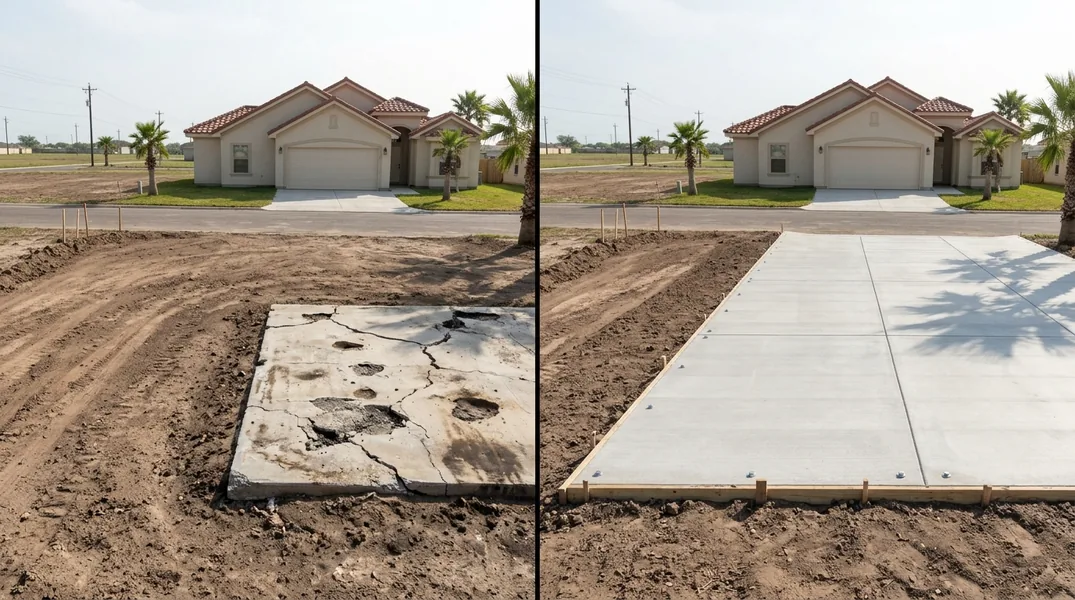
Understanding Slab-on-Grade Foundations in the Rio Grande Valley
If you're buying a new home in Brownsville, there's a good chance your foundation will be a slab-on-grade system. This construction method is standard throughout the Rio Grande Valley because it's cost-effective, quick to install, and well-suited to our flat terrain and climate. A slab-on-grade foundation consists of a single layer of concrete poured directly onto prepared soil, typically four to six inches thick, with reinforcement such as rebar or wire mesh to prevent cracking.
Understanding how Brownsville's climate and soil conditions affect your slab is essential before you close on your new build. The Rio Grande Valley's expansive clay soils and seasonal moisture fluctuations can cause concrete to shift and settle over time. Unlike pier-and-beam foundations that sit above the ground, slab-on-grade systems sit directly on soil, making them more vulnerable to movement if the underlying earth isn't properly prepared and compacted. This is why the construction phase is so critical to your home's long-term structural integrity.
What to Look for During Your New Home Foundation Inspection
Before you sign closing papers, hire a licensed home inspector who has specific experience with Brownsville and Rio Grande Valley construction. A thorough new home foundation inspection should examine the concrete slab for visible cracks, uneven surfaces, and signs of water intrusion. Walk the entire slab, paying attention to areas where the concrete meets the exterior walls and interior rooms. Minor hairline cracks (less than one-eighth inch wide) are often normal as concrete cures, but wider cracks or step cracks that offset vertically may indicate foundation movement or poor concrete placement.
Your inspector should also check for proper slope and drainage around the perimeter of the slab. In our humid Rio Grande Valley climate, water management is critical. The ground around your foundation should slope away from the house at a rate of at least one inch per foot for the first six feet. If water pools near the foundation or if you notice efflorescence (white, chalky deposits on the concrete surface), this signals moisture problems that could lead to mold, pest issues, and structural damage. Ask your builder or inspector about the vapor barrier that should be installed beneath the slab to prevent moisture from wicking up into your home.
Checking for Proper Concrete Curing and Quality Standards
New construction concrete should meet American Concrete Institute (ACI) standards, which specify proper mixing ratios, curing time, and finishing techniques. A quality slab poured for a new home typically requires at least seven days of proper curing before heavy loads are placed on it, though full strength develops over 28 days. If you're closing on a newly built home, ask your builder when the slab was poured and whether it received adequate curing time. Concrete that's finished too quickly or exposed to extreme temperature swings can develop surface spalling (flaking) and internal weaknesses that compromise durability.
Examine the concrete surface for signs of poor finishing work. A well-finished slab should be relatively smooth and uniform in color. Rough, pitted areas or significant color variations might indicate quality control issues during the pour. Check whether the builder used air-entrainment in the concrete mix, which creates tiny air bubbles that help the concrete withstand freeze-thaw cycles and salt exposure. While the Rio Grande Valley doesn't experience harsh winters, proper air-entrainment still improves durability and resistance to moisture-related deterioration.
Moisture Barriers and Vapor Protection in New Construction Slabs
One of the most overlooked aspects of new construction slab inspection is the vapor barrier system beneath the concrete. A proper moisture barrier prevents groundwater and soil moisture from rising into your home through the concrete, which can lead to mold growth, musty odors, and damage to flooring materials and insulation. In the Rio Grande Valley's humid climate, this protection is especially important. Your inspector should ask the builder about the type and thickness of the vapor barrier used, whether it was properly installed with sealed seams, and whether a secondary moisture control system is in place.
Modern building codes often require a polyethylene vapor barrier at least 6 mils thick, installed directly on the prepared subgrade before the concrete is poured. Some builders in Brownsville use more advanced moisture management systems that include drainage layers and sealed perimeter treatments. If your new home shows any signs of moisture problems after closing, such as damp spots on the slab or mold on the underside of flooring materials, you may need to invest in Concrete Repair & Resurfacing solutions to address the underlying moisture issue.
Long-Term Maintenance and Protection for Your New Slab
After you close on your new home, proper maintenance of your concrete slab will extend its life and prevent costly repairs down the road. Seal your slab within the first year of construction to protect the concrete from water penetration, salt spray (especially important if you live near the coast in the Rio Grande Valley), and UV damage. A quality concrete sealer creates a protective barrier that reduces moisture absorption and makes the surface easier to clean. Reapply sealer every two to three years, depending on foot traffic and weather exposure.
Monitor your slab regularly for new cracks, especially during seasonal weather changes when soil moisture levels fluctuate. If you notice cracks developing or if the slab begins to settle unevenly, address them promptly. Small cracks can be sealed with concrete crack filler to prevent water infiltration, while larger structural issues may require professional assessment. Keep gutters, downspouts, and grading around your home in good condition to direct water away from the foundation. If you need professional guidance on maintaining or repairing your new construction slab, Brownsville Concrete offers expert advice and quality solutions to keep your foundation in excellent condition for years to come.
When to Call a Professional: Getting a Free Estimate for Slab Issues
If you discover foundation problems during your inspection or after closing, don't delay in getting professional help. A structural engineer or experienced concrete contractor can assess whether issues are cosmetic or structural and recommend the best course of action. Some problems, like minor surface cracks or minor unevenness, are manageable and won't affect your home's value or safety. Others, like significant settlement, widespread cracking, or active moisture intrusion, require immediate intervention to prevent further damage.
Brownsville Concrete specializes in evaluating and repairing concrete foundations and slabs throughout the Brownsville area. Whether you need a pre-closing inspection consultation or post-purchase repair work, we're here to help protect your investment. Contact us at (956) 431-0098 or visit our website to request a free estimate for any slab-related concerns. Our team understands the unique challenges that Rio Grande Valley construction faces and can provide practical solutions tailored to your home's specific needs.
Looking for a professional concrete contractor in Brownsville? Brownsville Concrete responds fast for all your concrete needs.
Get a Free QuoteOur services: Concrete Driveways · Concrete Patios · Stamped & Decorative Concrete