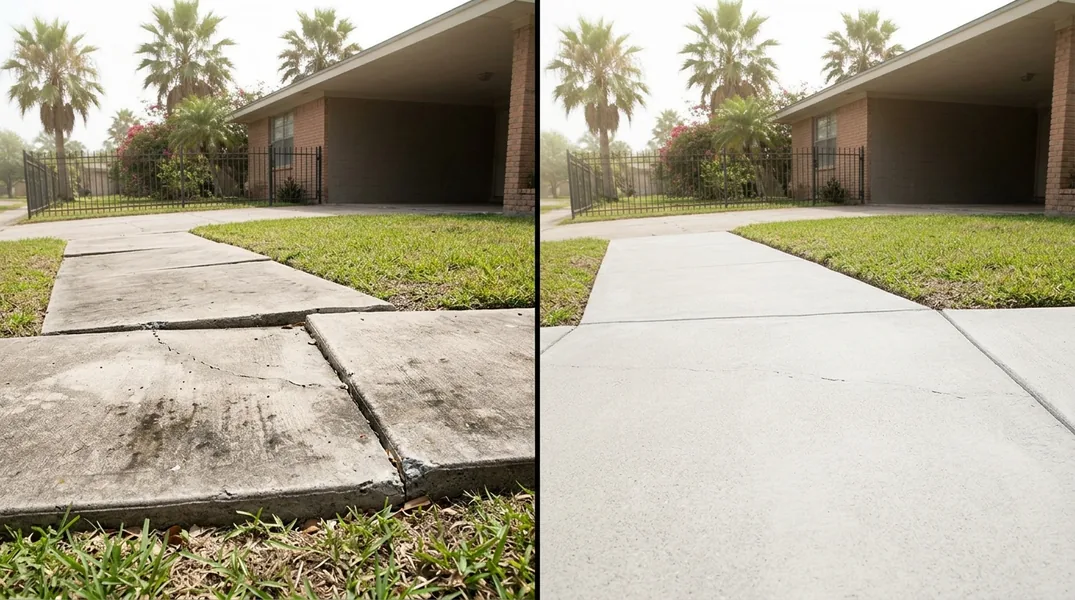
Understanding Expansive Clay in the Rio Grande Valley
If you live in Brownsville, you've probably noticed that concrete problems are common among your neighbors. Cracked driveways, uneven patios, and foundation shifts aren't just bad luck. They're the direct result of the soil beneath our feet. The Brownsville area sits atop the Rio Grande Delta, a region dominated by expansive clay soils that behave very differently from the soil found in other parts of Texas.
Expansive clay, also called montmorillonite clay, has a unique molecular structure that absorbs water and swells dramatically. When it rains, the clay expands. During dry periods, it shrinks and pulls away from concrete surfaces. This constant cycle of expansion and contraction creates tremendous pressure on anything built on top of it, including your Concrete Driveways. Unlike clay in other regions, the clay in the Brownsville area is particularly aggressive because of our subtropical climate, which brings both heavy seasonal rains and extended dry periods.
Why Brownsville Clay Soil Is Harder on Concrete Than Other Regions
The problem isn't just that we have clay soil. Many parts of Texas do. The issue is the specific composition and the climate pattern that activates it. Our delta clay contains high concentrations of montmorillonite, a mineral that can expand up to 15 percent when saturated with water. When the summer heat arrives and the soil dries out, it shrinks at an equally dramatic rate. This expansion and contraction cycle happens repeatedly throughout the year, and concrete is rigid. It cannot flex the way soil can, so it bears the brunt of these forces.
Homeowners in Harlingen, San Benito, and Los Fresnos report the same issues because they sit on the same geological foundation. The problem is compounded by our region's heavy rainfall during hurricane season, which saturates the soil deeply and triggers massive expansion events. A single tropical storm can introduce enough moisture to cause significant heave in concrete that was stable just weeks before.
Common Signs of Expansive Soil Damage to Your Driveway
A cracked driveway Brownsville homeowners experience often follows a predictable pattern. You may notice a single crack that runs across the surface, or multiple cracks that form a web-like pattern. Some driveways develop a noticeable hump or dome in the center, a clear sign that the soil beneath has expanded and pushed the concrete upward. Other times, you'll see the opposite: sections of concrete that have sunk or settled unevenly, creating tripping hazards and poor drainage.
These signs typically appear within the first few years after installation, though they can develop at any time. If you've noticed these problems with your own driveway or patio, you're not alone. The good news is that understanding the cause is the first step toward finding a solution. Concrete Repair & Resurfacing specialists can assess the damage and recommend whether patching, resurfacing, or complete replacement is the best path forward for your property.
Prevention Strategies for New Concrete Installation
If you're planning to install new concrete in Brownsville, prevention is far more cost-effective than dealing with damage later. The foundation preparation is critical. A professional concrete contractor will recommend a deeper, more stable subbase that accounts for clay movement. This typically involves proper grading to ensure water doesn't pool around the concrete, and sometimes the addition of a moisture barrier or stabilized base material that resists the expansion forces of our local soil.
Another key strategy is thickness and reinforcement. Standard concrete may not be thick enough to handle the pressures from expansive clay in our region. Reinforcing the concrete with wire mesh or rebar, or using post-tensioning, can help it resist the forces trying to crack it. Additionally, proper joint spacing and control joints allow the concrete to move slightly without developing destructive cracks. When you request a free estimate from Brownsville Concrete, our team will discuss these prevention measures and explain how they protect your investment over time.
Concrete Repair Options for Existing Damage
If your driveway or patio already shows signs of damage from expansive soil, don't assume it's a total loss. Concrete Repair & Resurfacing can address many common problems. Minor cracks can be sealed to prevent water infiltration, which would only worsen expansion in the future. Larger cracks or sections that have shifted may require removal and replacement of the affected area. In some cases, a complete resurfacing with a bonded overlay can restore the surface while the existing base remains in place, reducing the overall cost compared to full removal and replacement.
The right repair method depends on the extent of the damage and what's causing it. If the underlying soil is still actively expanding, repairs alone won't solve the problem permanently. That's why professional assessment is essential. Brownsville Concrete can evaluate your specific situation and recommend whether repairs will hold up long-term or whether a more comprehensive solution is necessary. Contact us at (956) 431-0098 to discuss your options and get a professional opinion on what your driveway needs.
Concrete Repair Cost in Brownsville: What to Budget
The cost of addressing expansive soil damage varies widely depending on the severity of the problem and the repair method chosen. A simple crack seal might cost a few hundred dollars, while resurfacing a large driveway could run several thousand. Full removal and replacement of a damaged driveway is the most expensive option, but it may be the most durable solution if the underlying soil conditions haven't improved. Understanding the pricing for different repair approaches helps you make an informed decision about where to invest your money.
When you're comparing estimates, make sure contractors are accounting for the unique challenges of our local soil. A contractor unfamiliar with expansive clay may underestimate what's needed to make a repair last. Brownsville Concrete specializes in this region's specific conditions and can provide realistic pricing that reflects the proper techniques needed. We recommend getting at least two professional assessments before committing to any major repair. Call us at (956) 431-0098 or visit our website to request your free estimate today.
Looking for a professional concrete contractor in Brownsville? Brownsville Concrete responds fast for all your concrete needs.
Get a Free QuoteOur services: Concrete Driveways · Concrete Patios · Stamped & Decorative Concrete