Concrete vs. Pavers: Understanding Your Options
When it comes time to upgrade your driveway or patio in Brownsville, you'll likely face one key decision: should you choose concrete or pavers? Both materials offer distinct advantages and drawbacks, and the right choice depends on your budget, aesthetic preferences, maintenance tolerance, and long-term plans for your property. Understanding the fundamental differences between these two popular options is the first step toward making an informed decision that you'll be happy with for years to come.
Concrete and pavers represent two very different approaches to hardscaping. Concrete is a monolithic material, typically poured as one continuous slab, while pavers are individual units that interlock or are laid side-by-side. This fundamental difference affects everything from installation time and cost to how each material performs under Brownsville's hot, humid climate. Each option has earned its place in the Rio Grande Valley landscape, and both can deliver excellent results when properly installed and maintained.
Durability and Performance in the Rio Grande Valley Climate
The Rio Grande Valley's climate presents unique challenges for any outdoor surface. With intense summer heat, occasional freeze-thaw cycles, high humidity, and salt air exposure near the coast, your driveway or patio needs to withstand demanding conditions. Concrete Driveways in this region typically perform extremely well, as modern concrete formulations are specifically designed to resist thermal stress and moisture penetration. When properly sealed and maintained, a concrete surface can last 30 to 40 years or even longer in the Brownsville area.
Pavers, by contrast, offer a different kind of durability. Individual paver units are extremely hard and resistant to cracking, since they're manufactured in controlled conditions and don't experience the same stress as a monolithic slab. However, the joints between pavers can become problematic over time. Sand and soil can wash away, weeds can grow through, and the base material can settle unevenly, causing pavers to shift or become uneven. In a climate with heavy rainfall and intense sun, you'll need to re-sand joints periodically and monitor the base for settling. Both materials can last decades, but they require different maintenance approaches to achieve that longevity.
Maintenance Requirements and Long-Term Care
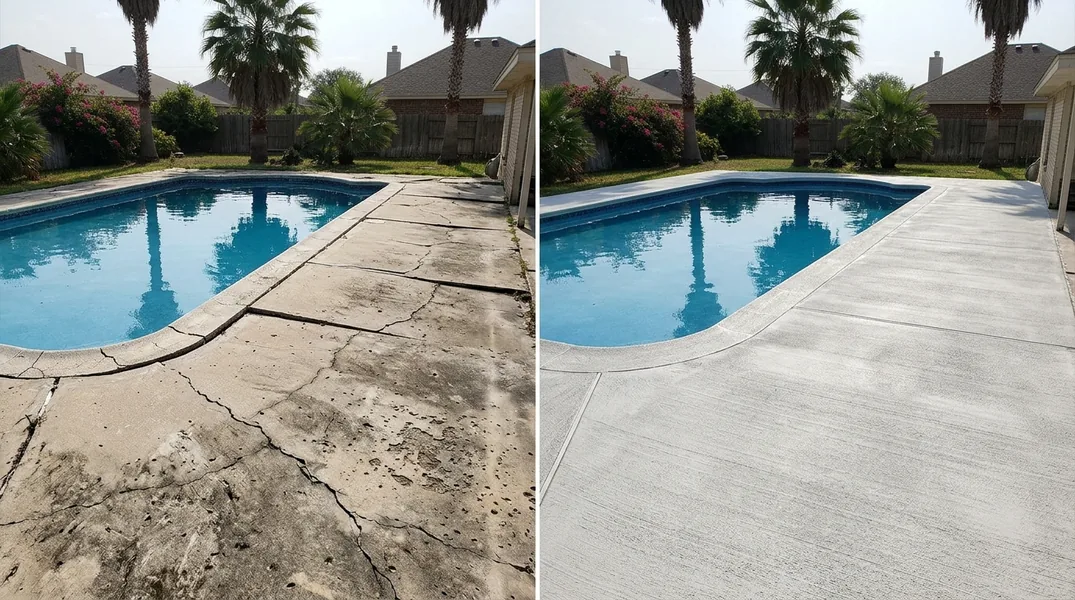
Maintenance is where concrete and pavers diverge significantly. Concrete Patios require relatively straightforward care: regular sweeping or power washing, occasional re-sealing every 2 to 3 years, and prompt attention to any cracks or spalling. If damage does occur, Concrete Repair & Resurfacing services can restore the surface without replacing the entire slab. Most homeowners find concrete maintenance manageable and cost-effective, especially over a 20 to 30-year span.
Pavers demand more hands-on attention. Beyond regular cleaning, you'll need to maintain the joint sand, inspect for weeds, and address any pavers that have shifted or become uneven. If a single paver cracks or breaks, you can replace just that unit, which is a nice advantage. However, if multiple pavers need replacement or the base settles significantly, the repair costs can add up quickly. Some homeowners enjoy the modular nature of pavers and the ability to refresh sections of their patio, while others find the ongoing maintenance burdensome. Your tolerance for regular upkeep should factor into your decision.
Concrete Driveways Cost in Brownsville: What to Budget
When comparing pricing for concrete versus pavers, concrete typically offers the better value upfront. A standard concrete driveway in Brownsville generally costs between $6 to $12 per square foot for installation, depending on site preparation, thickness, and finish type. For a 500-square-foot driveway, you're looking at $3,000 to $6,000 for a basic gray concrete surface. Pavers, by comparison, usually run $10 to $25 per square foot installed, putting that same 500-square-foot project at $5,000 to $12,500 or more. The initial investment for pavers is substantially higher, which is an important consideration if you're working with a tight budget.
However, total cost of ownership extends beyond installation. Concrete requires periodic sealing at roughly $0.50 to $1.50 per square foot every few years, plus occasional repairs. Pavers require joint sand replenishment, weed control, and potential paver replacement over time. When you factor in 30 years of maintenance, the costs can become comparable, but the upfront financial burden is considerably lower with concrete. If you're planning to stay in your Brownsville home long-term and want to minimize initial expenses, concrete is usually the more economical choice. To understand the exact costs for your specific project, reach out to Brownsville Concrete at (956) 431-0098 or request a free estimate.
Aesthetic Considerations and Design Flexibility
Aesthetics matter, and this is where pavers often shine. Pavers come in virtually unlimited colors, patterns, and textures, allowing you to create intricate designs, borders, and visual interest. Whether you prefer a Mediterranean look, a contemporary pattern, or something uniquely personal, pavers can deliver. Stamped & Decorative Concrete has also evolved dramatically, offering homeowners impressive design options that rival pavers in visual appeal. Modern stamped concrete can replicate the look of brick, stone, slate, or tile while maintaining the durability and ease of care of a solid slab.
Plain gray concrete, while functional and clean-looking, doesn't offer the same visual richness as decorative options. However, if you choose to invest in stamped patterns, exposed aggregate, colored concrete, or other decorative finishes, you can achieve stunning results that enhance your home's curb appeal. Many homeowners in the Rio Grande Valley are discovering that a well-designed concrete surface can be just as attractive as pavers, with significantly less maintenance required. The key is choosing a finish that complements your home's architecture and your personal style preferences.
Which Option Is Right for Your Brownsville Home?
Choosing between concrete and pavers ultimately depends on your priorities. If you value lower upfront costs, minimal maintenance, and long-term durability with predictable care requirements, concrete is your best bet. If you're willing to invest more initially and don't mind regular upkeep in exchange for maximum design flexibility and the ability to replace individual units, pavers might be worth the investment. Consider your lifestyle, budget, and how long you plan to stay in your home. Are you an active homeowner who enjoys outdoor projects, or do you prefer to set it and forget it? Do you prioritize visual impact, or is functionality your main concern?
The good news is that both concrete and pavers can deliver excellent results in the Brownsville climate when properly installed by experienced professionals. Brownsville Concrete specializes in helping homeowners make the right choice for their unique situation. Whether you're leaning toward a beautiful Concrete Driveways installation, exploring decorative finishes, or simply weighing your options, our team is here to guide you. Contact us at (956) 431-0098 or visit our website to request a free estimate and discuss your project with a local concrete expert who understands the Rio Grande Valley's unique demands.
Looking for a professional concrete contractor in Brownsville? Brownsville Concrete responds fast for all your concrete needs.
Get a Free QuoteOur services: Concrete Driveways · Concrete Patios · Stamped & Decorative Concrete